Research Article
The use of heuristics in quick decision-making as a manifestation of bounded rationality under stress
El uso de heurísticas en la toma de decisiones rápidas como manifestación de racionalidad limitada bajo estrés
Mykhailo Zhylin1* https://orcid.org/0000-0003-2898-4403
Tetiana Morozova2 https://orcid.org/0000-0002-0182-463X
Viktoriia Malysh1 https://orcid.org/0009-0002-6869-4822
Svitlana Bondarevych1 https://orcid.org/0000-0002-7350-2947
Olena Medianova3 https://orcid.org/0000-0002-8681-4835
1Odesa National Maritime University. Odesa, Ukraine.
2National Academy of the Security Service of Ukraine. Kyiv, Ukraine.
3Ukrainian State University named after Mykhailo Drahomanov. Kyiv, Ukraine.
*Author for correspondence. Email: zhylinmyhailo@gmail.com
ABSTRACT
Introduction: The relevance of this study is due to the increasing influence of quick and incomplete decision-making within crisis environments, particularly in extreme social or organizational contexts.
Objective: Identifying the characteristics of heuristic application during decision-making processes under cognitive load and stress, interpreting these phenomena as manifestations of bounded rationality.
Methods: Data were gathered utilizing the situational anxiety questionnaire STAI, the intuitiveness scale CSI, and the author’s original set of heuristic tasks (HDMI). Statistical analysis was conducted employing Student’s t-test, Pearson correlation analysis, linear regression, and one-way analysis of variance (ANOVA). The reliability of the methods was assessed through the three-sigma criterion and Cronbach’s α coefficient.
Results: The study encompassed 120 participants. Individuals in the experimental group exhibited significantly elevated HDMI scores (M = 61.4) compared to the control group (M = 49.1), p < 0.001. The degree of situational anxiety was positively correlated with heuristics (r = 0.42), and this relationship was statistically significant, p < 0.01. The heuristics were found to be contextually sensitive to stress and cognitive style, indicating its adaptive nature.
Conclusions: Stress significantly increases heuristic decision-making, with anxiety intensifying this effect and cognitive style acting as a moderator.
Keywords: adaptation, psychological; anxiety; cognition; decision making; heuristics; reproducibility of results; resilience, psychological; stress, psychological; surveys and questionaires.
RESUMEN
Introducción: La relevancia de este estudio radica en la creciente influencia de la toma de decisiones rápida e incompleta en entornos de crisis, particularmente en contextos sociales u organizacionales extremos.
Objetivo: Identificar las características de la aplicación de heurísticas durante los procesos de toma de decisiones bajo carga cognitiva y estrés, e interpretar estos fenómenos como manifestaciones de racionalidad limitada.
Métodos: Los datos se recopilaron mediante el cuestionario de ansiedad situacional STAI, la escala de intuición CSI y el conjunto original de tareas heurísticas (HDMI) del autor. El análisis estadístico incluyó la prueba t de Student, el análisis de correlación de Pearson, la regresión lineal y el análisis de varianza de una vía (ANOVA). La fiabilidad de los métodos se evaluó mediante el criterio de tres sigma y el coeficiente α de Cronbach.
Resultados: El estudio incluyó 120 participantes. Los individuos del grupo experimental mostraron puntuaciones HDMI significativamente más elevadas (M = 61,4) en comparación con el grupo control (M = 49,1), p < 0,001. El grado de ansiedad situacional se correlacionó positivamente con el uso de heurísticas (r = 0,42); relación que resultó estadísticamente significativa (p < 0,01). Se observó que las heurísticas eran contextualmente sensibles al estrés y al estilo cognitivo, lo que indica su naturaleza adaptativa.
Conclusiones: El estrés incrementa significativamente la toma de decisiones heurística, efecto intensificado por la ansiedad y moderado por el estilo cognitivo.
Palabras clave: adaptación psicológica; ansiedad; cognición; encuestas y cuestionarios; estrés psicológico; heurística; reproducibilidad de resultados; resiliencia psicológica; toma de decisiones.
Received: 30/12/2025
Approved: 25/02/2026
INTRODUCTION
In contemporary environments characterized by information overload and frequent high-pressure scenarios, individuals across professional and social domains are increasingly required to make rapid decisions with incomplete data.(1) This reality underscores the critical importance of understanding the cognitive frameworks that govern such decisions. The concept of bounded rationality provides a foundational lens for this inquiry, acknowledging the inherent limitations of human information processing capacity.(2) Within these constraints, heuristic thinking emerges not as a mere collection of errors, but as a suite of adaptive, cognitive “shortcuts” essential for efficiency.(3) However, a significant gap persists in current understanding of the precise dynamics between acute psychological stress and the activation of these heuristic strategies,(4) particularly when moderating variables like cognitive style are considered.(5)
The theoretical underpinnings of bounded rationality and heuristics are well-established. Research confirms that in uncertain environments, individuals reliably employ strategies like the representativeness heuristic to expedite judgments.(6) Similarly, studies on the anchoring effect demonstrate how initial impressions can systematically bias final decisions, even in contexts like online user behavior.(7,8) This reliance on intuitive, "System 1" processes is notably pronounced under time pressure, challenging purely rational models of decision-making even among professionals.(9) While these studies establish the prevalence of heuristics, they often lack integration with psychophysiological data on stress states.
Advancements in psychoneuroscience illuminate the potential mechanism linking stress to heuristic reliance. Empirical evidence indicates that stress directly impairs prefrontal cortex function, a region central to executive control and deliberate reasoning, thereby promoting a shift towards more automatic, intuitive thought processes.(10) For instance, social stress has been shown to significantly reduce executive function, with physiological markers like heart rate corroborating these cognitive shifts.(10) Other studies link stress to increased activity in brain regions associated with automated responses, thereby facilitating the use of heuristics like representativeness.(11) Furthermore, even moderate levels of anxiety can reduce cognitive flexibility, limiting the ability to adapt strategies in high-stakes situations.(12) These works are invaluable for incorporating objective biological indicators, though they are often constrained by limited sample sizes.
Complementing this, the literature on decision-making under load examines the strategic adaptations to informational or emotional pressure. Models propose an adaptive trade-off, where individuals simplify choice architectures by resorting to heuristics when confronted with excessive options.(13) Emotional arousal has been linked to accelerated “cognitive fatigue,” prompting a quicker shift to easily accessible judgments via the availability heuristic.(14) Moreover, simultaneous multimodal cognitive loads can lead to the adoption of faster, albeit less accurate, evaluative strategies to avoid exhaustive processing.(15) While these studies benefit from multi-channel methodologies, they frequently overlook the temporal dimension of stress exposure and its cumulative effect on strategy selection.
Despite this extensive multidisciplinary examination, several critical issues remain under-researched. The specific functionality and selection criteria of different heuristics under conditions of induced, experimentally controlled stress are not fully mapped. There is a notable scarcity of empirical research that systematically correlates graded levels of subjective stress with the deployment of specific heuristic strategies (e.g., anchoring vs. availability). Consequently, the impact of stress on the frequency and typology of decision-making errors arising from heuristic use is not yet comprehensively understood. Finally, the scientific discourse lacks a coherent operational framework for studying heuristics explicitly within the context of acute, ecologically valid stress responses.
To address these gaps, the present study introduces a novel integrative approach. The scientific novelty of this research resides in the proposed synthesis of a psychophysiological stress induction paradigm with a fine-grained assessment of heuristic decision-making. This integration facilitates a more profound, mechanistic comprehension of the interplay between affective states and cognitive processes, thereby enriching the theoretical model of bounded rationality with an essential dynamic component.
The primary aim of this study is to examine the influence of induced cognitive load and stress on heuristic decision-making, interpreting this phenomenon as a direct manifestation of bounded rationality.
METHODS
Design and type of study
This study utilized a quantitative, quasi-experimental design with a between-groups comparison. Conducted from September 2024 to June 2025, the research involved three sequential stages and included both control and experimental conditions. This design enabled the establishment of a causal relationship between induced stress and the use of heuristics. By standardizing procedures in a laboratory setting, internal validity was increased while the ecological validity of the stress induction was maintained. The comparative framework also provided robust control over external variables.
To achieve this aim, the following research objectives were pursued: (1) To identify the typical heuristics activated in response to standardized stressful stimuli; (2) to correlate varying levels of situational anxiety with the prevalence of particular heuristic strategies; and (3) to evaluate statistically significant divergences in heuristic application between an experimental (stressed) group and a control group.
Participants
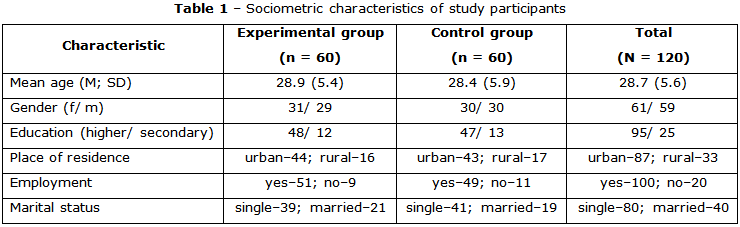
The study encompassed a cohort of 120 individuals (n = 120), selected using a stratified random sampling method taking into account age, gender, and basic education (table 1). The sample included individuals who had no history of psychiatric diagnoses, who were not under pharmacological treatment at the time of the study, and provided informed consent to participate. All respondents had a complete secondary or higher education and demonstrated the capacity for independent decision-making.
The sample of 120 participants was divided into a control group (n = 60) and an experimental group (n = 60) using block randomization. This method ensured gender and education levels were evenly distributed between the groups, minimizing bias. A power analysis was conducted to determine the required sample size, indicating that 45 participants per group would be sufficient to detect a medium effect size (d = 0.6) with 80% statistical power (1–β = 0.80) at a significance level of α = 0.05.
Instruments
IBM-SPSS statistical software (v. 28) was employed for data analysis, ensuring the accuracy of calculations and facilitating the examination of intricate models. For the graphical representation of the results, the IBM-SPSS Chart Builder tools and Jamovi (v. 2.4) were utilized to create distribution diagrams, scatter plots, and box plots. The visualization of correlations and mean values, accompanied by confidence intervals, was instrumental in elucidating intergroup differences. The graphs were constructed in adherence to the scientific infographics standards: Scales were appropriately labeled, units of measurement were specified, and statistical significances were duly marked.
Procedures
This study involved 120 participants who were randomly assigned to either an experimental group (EG, n = 60) or a control group (CG, n = 60) for a 45-minute individual lab session. Data were gathered utilizing the State–Trait Anxiety Inventory (STAI),(17) the Cognitive Style Inventory (CSI),(18) and the author’s original Heuristic Decision-Making Inventory (HDMI).(16) The experimental group underwent the same procedure, but with a stress induction phase beforehand. Participants were told they would deliver a two-minute speech on an emotionally sensitive topic to be recorded and evaluated. This was followed by a second administration of the STAI to measure induced stress. They then completed the same HDMI and CSI tasks as the control group. All sessions were meticulously standardized, and participants were informed they could withdraw at any time.
Operationalization of Hypotheses
To provide a clear, concise overview of the study’s design, here is a summary of the hypotheses and their operationalization. The study was built around three key hypotheses. The central hypothesis proposed that induced stress would increase the frequency of heuristic decision-making. To test this, stress was treated as the independent variable (induced via experimental conditions), while the frequency of heuristic decisions was the dependent variable, measured using the HDMI and STAI scales. This addressed the second research objective: To compare stress levels with the frequency of heuristic use.
The first secondary hypothesis was that the level of subjective stress would correlate with the use of specific heuristics like anchoring, availability, and representativeness. Here, the independent variable was the subjective anxiety inventory score (STAI), and the dependent variable was the use of specific heuristics, which was measured through STAI scores and content analysis of responses. This corresponded to the first research objective: To identify typical heuristics used under stress.
Finally, the exploratory secondary hypothesis examined if the frequency of heuristic errors would be higher in the stressed group, regardless of an individual's cognitive style. For this, the independent variables were the participant’s group (control or experimental) and their cognitive style, while the number of heuristic errors was the dependent variable, measured with the HDMI and CSI scales. This served the third research objective: To assess the differences between the control and experimental groups.
Data Collection and Analysis
HDMI. This standardized psychodiagnostic questionnaire is meticulously crafted to elucidate an individual’s tendency for employing heuristics such as "anchoring", "accessibility", and "representativeness". The methodology comprises 24 items assessed on a 5-point scale ranging from “completely disagree” to “completely agree”. Owing to HDMI utilization, the frequency of heuristic strategies in decision-making processes within typical cognitive contexts was quantified.(16)
The STAI questionnaire was employed to measure situational anxiety, serving as a significant indicator of acute stress reaction. The methodology consists of 20 statements that encapsulate the respondent’s prevailing emotional state while undertaking research tasks. This instrument is widely esteemed and boasts high validity and reliability for the assessment of stress states in the short term.(17)
The CSI questionnaire facilitated the identification of the respondents’ predominant cognitive style (rational or intuitive) by evaluating their preferences in information processing. The tool encompasses 18 items designed to assess cognitive strategies in decision-making scenarios. The implementation of the CSI enabled the consideration of individual differences that could potentially modulate the application of heuristics under conditions of cognitive load and stress.(18)
The Shapiro–Wilk test was employed to evaluate the distribution normality. Differences between groups were examined utilizing Student’s t-test and one-way analysis of variance (ANOVA). Descriptive statistical methods were implemented for the preliminary assessment of variables: Mean values (M), standard deviations (SD), minimum and maximum values (min–max), in addition to calculating 95% of confidence intervals. Correlations between stress levels and the frequency of heuristic decision-making were determined using the Pearson correlation coefficient. Multiple linear regression analysis was utilized to identify predictors of heuristic behavior.
To assess the internal consistency of the scales, Cronbach’s alpha coefficient was computed, with all instruments surpassing the threshold of 0.80, thereby indicating high reliability. To identify potential outliers, the three-sigma criterion (μ ± 3σ) was employed, which identified statistically atypical observations.
Ethical principles of research
The study was conducted in adherence to the Code of Ethics for Psychologists(19) and the stipulations set forth in the Declaration of Helsinki.(20) All participants provided written informed consent subsequent to being apprised of the study’s objectives and conditions. The right to withdraw at any point was unequivocally assured. All data were anonymized, and the results were processed in a manner that ensured their impersonal nature. The project received approval during a convened session of the local ethics committee at the higher education institution where the authors are affiliated.
RESULTS
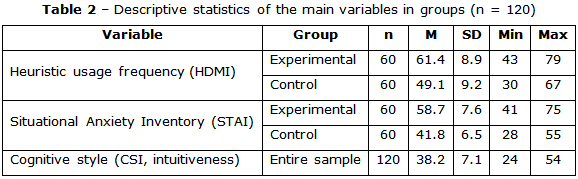
An analysis of the results revealed substantial disparities between the experimental and control groups concerning the frequency of using heuristics and the degree of situational anxiety. These distinctions underscore the impact of the examined factors on the cognitive strategies and the participants’ emotional states. Comprehensive quantitative data pertaining to these variables are presented in table 2.
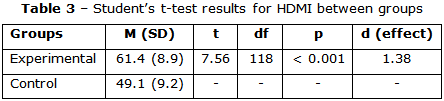
Table 3 delineates substantial disparities between the experimental and control groups concerning heuristics and situational anxiety. The average intuitiveness value, as measured by CSI, indicates a predominance of a moderately intuitive cognitive style among the participants. To evaluate the central hypothesis, an independent samples t-test was conducted to compare the frequency of HDMI between the EG and the CG (table 3).
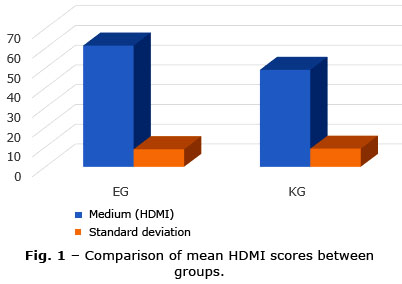
The results of the t-test revealed a statistically significant disparity between the experimental and control groups regarding the frequency of heuristic decisions (p < 0.001). The effect size (d = 1.38) underscores a robust practical significance of the observed difference. The acquired data substantiate the central hypothesis concerning the impact of stress on the activation of heuristic thinking strategies. Figure 1 shows a comparative analysis of mean HDMI scores across the groups.
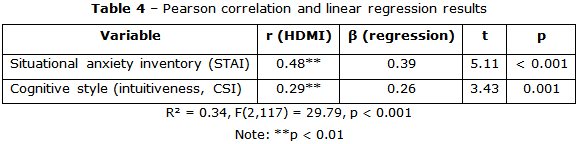
The figure illustrates a comparative analysis of the mean values of frequency HDMI between the experimental and control groups. The visualization indicates a heightened average score within the stressed group, with standard deviation serving as a metric for variability. To investigate the second hypothesis, an examination of the correlation between situational anxiety levels (STAI) and the frequency of HDMI, alongside a model incorporating two predictors, was undertaken (table 4).
The findings presented in table 4 revealed a statistically significant positive correlation between the degree of anxiety and the frequency of heuristic decision-making (r = 0.48; p < 0.001). Furthermore, intuitive cognitive style emerged as a moderate yet significant predictor of heuristic behaviors (r = 0.29; p = 0.001). The regression model incorporating these two predictors was statistically significant (R² = 0.34), suggesting that it accounted for one-third of the variability in the dependent variable. Consequently, the hypothesis regarding the influence of affective state and cognitive style on expedited decision-making has received empirical confirmation.
DISCUSSION
The results empirically validated all three hypotheses, demonstrating that situational stress significantly amplifies the use of heuristic decision-making, a finding consistent with Kahneman's dual process theory.(21) This conclusion aligns with research showing that stress impedes prefrontal control and activates automated strategies.(22,23) The positive correlation between anxiety and heuristic thinking corroborates the emotional stress model,(24) which posits that stress alters cognitive availability, a trend also noted in studies on risky decision-making(25) and the adaptive function of heuristics in conditions of incomplete information.(26) However, some findings, such as those by authors,(27) suggest that metacognitive skills and training can mitigate this effect. Third hypothesis was also validated, revealing that stress has a more pronounced effect on individuals with an intuitive thinking style, a finding consistent with authors.(28,29) While the disparity between rational and intuitive thinkers may diminish with higher motivation for accuracy,(30) this study underscores that stress serves as a pivotal catalyst for the shift to heuristics, enriching the theory of bounded rationality by incorporating an affective component. The findings suggest that heuristics are not merely cognitive errors but an effective strategic response to cognitive overload, with practical implications for training professionals in high-stress environments and for developing tailored training strategies based on cognitive style.
Findings provide robust empirical support for the proposed hypotheses, confirming that situational stress acts as a significant amplifier of heuristic processing, a conclusion that aligns with the core tenets of Kahneman's dual-process theory(21) and neurocognitive evidence on stress-induced prefrontal inhibition.(22,23) Crucially, this study contributes to a refined theoretical understanding by framing this cognitive shift not merely as a deficit but as a fundamental adaptation to stress. The observed reduction in rationalization can be interpreted as an adaptive mechanism that preserves psychological resources, thereby safeguarding the internal world of the individual and reinforcing self-worth under duress. This perspective positions heuristic use as a component of psychological resilience and stress resistance, integral to the socio-psychological technologies for the reproduction of personal integrity. Ultimately, by conceptualizing the stress-driven reliance on heuristics as a bounded yet functional response, our research enriches the theory of bounded rationality with a vital affective dimension and offers a principled foundation for developing stress-management protocols that bolster individual resilience in high-pressure environments.
The study has several notable limitations. The experimental results may lack external validity due to the controlled laboratory environment, the use of standardized stressors, and a homogeneous participant sample, which restricts the generalizability of the findings to real-world contexts and diverse populations. Furthermore, the methodology used to assess heuristic use might have overlooked less common cognitive strategies. The research also did not account for the long-term effects of stress on cognition or the influence of cultural factors. Finally, the reliance on self-assessment for cognitive style introduces potential biases, a common limitation of such instruments.
The findings obtained are pertinent in light of the growing necessity for analyzing behavior under stress and uncertainty. They enhance the comprehension of cognitive vulnerability and possess practical significance in domains where the speed and accuracy of decision-making are paramount to efficiency and safety. The results elucidate that heuristic thinking operates as a context-variable mechanism responsive to stress and cognitive profile, thereby enriching the concept of bounded rationality as a dynamic, adaptive process. All three hypotheses posited have been empirically substantiated: Stress escalates the frequency of heuristic decisions, anxiety correlates with heuristic tendencies, and cognitive style moderates this relationship. The results can be utilized to enhance decision-making efficacy in high-stress professional domains such as medicine, aviation, and crisis management. Subsequent inquiries should focus on examining the influence of stress on heuristic thinking across diverse social and clinical contexts. The results obtained from this research contribute to the enhancement of decision-making in stressful professional environments and pave the way for further exploration into individual and contextual factors.
Stress significantly increases heuristic decision-making, an effect intensified by anxiety and moderated by cognitive style.
BIBLIOGRAPHIC REFERENCES
1. Ishchenko Y, Chystovska Y, Vovchenko O, Harkusha I, Voshkolup H. The Role of Emotional Intelligence in the Rehabilitation of the Former Prisoners of War [Internet]. Int J Stats Med Res. 2023; 12:240–248. DOI: 10.6000/1929-6029.2023.12.28
2. Boissin E, Pennycook G. Who benefits from debiasing? [Internet]. Cognition. 2025;262. DOI: 10.1016/j.cognition.2025.106166
3. Ishchenko Y, Yevchenko I, Masliuk A, Myronets S, Potapchuk Y. The impact of the emotional intelligence of military leaders in crisis management in times of war [Internet]. Rev cuba med mil. 2024 [access: 18/08/2025]; 53(2):e024043640. Available from: https://revmedmilitar.sld.cu/index.php/mil/article/view/43640/2583
4. Yıldırım A. Some Heuristics, Biases, and Thinking Mistakes. In: Behavioral Economics in Healthcare [Internet]. Leeds: Emerald Publishing Limited; 2024. DOI: 10.1108/978-1-83662-080-820241003
5. Esponda I, Vespa E, Yuksel S. Mental models and learning: The case of base-rate neglect [Internet]. Am Econ Rev. 2024 [access: 18/08/2025]; 114(3):752–82. Available from: https://www.aeaweb.org/articles?id=10.1257/aer.20201004
6. Dragomir-Constantin FL. Thinking patterns in decision-making in information systems [Internet]. New Trends Psychol. 2025 [access: 18/08/2025];7(1):89–98. Available from: https://dj.univ-danubius.ro/index.php/NTP/article/view/3255
7. Love PE. The Ecological Rationality of Heuristics: Implications for Decision-Making under Uncertainty in Construction [Internet]. J Manag Eng. 2025; 41(2):6464. DOI: 10.1061/JMENEA.MEENG-6464
8. Nadurak V. How to evaluate the rationality of heuristics? [Internet]. Think Reason. 2025; 31(2):137–157. DOI: 10.1080/13546783.2024.2395063
9. Chen JL, Baláž V, Li G, Williams AM. Tourist Decision-Making and Types of Crises: Risk Attitudes, Knowledge, and Destination Preference Persistence [Internet]. J Hosp Tour Res. 2025; 50(2):271-87. DOI: 10.1177/10963480241310819
10. Picciotto G, Fabio RA. Does stress induction affect cognitive performance or avoidance of cognitive effort? [Internet]. Stress Health. 2024; 40(1): e3280. DOI: 10.1002/smi.3280
11. Wessa M, Sandner M, Rimpel J, Schönfelder S. The influence of acute stress exposure on cognitive reappraisal: a psychophysiological study [Internet]. Stress. 2024;27(1): 2329663. DOI: 10.1080/10253890.2024.2329663
12. Knöbel S, Borchert A, Gatzmaga N, Heilmann F, Musculus L, Laborde S, et al. The impact of soccer-specific psychophysiological stress on inhibition and cognitive flexibility in elite youth players [Internet]. PSE. 2024;74: 102682. DOI: 10.1016/j.psychsport.2024.102682
13. Zhang K, Peng G. The modulation of cognitive load on speech normalization: A neurophysiological perspective [Internet]. Brain Lang. 2025;266: 105579. DOI: 10.1016/j.bandl.2025.105579
14. van der Veer A, Madern T, van Lenthe FJ. Tunneling, cognitive load and time orientation and their relations with dietary behavior of people experiencing financial scarcity–an AI-assisted scoping review elaborating on scarcity theory [Internet]. Int J Behav Nutr Phys Act. 2024 [access: 19/08/2025];21:26.. Available from: https://link.springer.com/article/10.1186/s12966-024-01576-9
15. Gilbert SJ. Cognitive offloading is value-based decision making: Modelling cognitive effort and the expected value of memory [Internet]. Cognition. 2024; 247:105783. DOI: 10.1016/j.cognition.2024.105783
16. Thomas CL, Cassady JC. Validation of the state version of the state-trait anxiety inventory in a university sample [Internet]. Sage Open. 2021;11(3): [aprox. 19 scr.]. DOI: 10.1177/21582440211031900
17. Yamini S, Gajanand MS. Inventory decision-making biases: a review and suggestions for future research [Internet]. BIJ. 2022;29(6):1889–1912. DOI: 10.1108/BIJ-01-2021-0061
18. Taçgin Z, Denizli-Polat AA. Adapting and Validating Cognitive and Learning Style Inventories in Turkey: Insights into Cultural and Educational Influences [Internet]. Int j psychol educ stud. 2025 [access: 18/08/2025];12(1):47–65. Available from: https://files.eric.ed.gov/fulltext/EJ1461958.pdf
19. National Psychological Association of Ukraine (NPAU). Code Of Ethics For Psychologists [Internet]. Ukraine: NPAU; 2021. [access: 20/08/2025]. Available from: https://npa-ua.org/pub/files/5a70319ea92e75d0.pdf
20. World Medical Association. WMA Declaration of Helsinki: ethical principles for medical research involving human subjects [Internet]. Helsinki: World Medical Association; 2024. [access: 18/08/2025]. Available from: https://www.wma.net/policies-post/wma-declaration-of-helsinki-ethical-principles-for-medical-research-involving-human-subjects/
21. Khalil EL, Amin A. The parallelism of cognitive economy and physiological economy: A rationality-based dual process theory [Internet]. Curr Psychol. 2023;42(28):24148–62. DOI: 10.1007/s12144-022-03554-5
22. Nagai H. Deciphering prefrontal circuits underlying stress and depression: exploring the potential of volume electron microscopy [Internet]. Microscop. 2024;73(5):391–404. DOI: 10.1093/jmicro/dfae036
23. Ali W, Wilson J, Hamza M. A Meta Analytical Study of Cultural Conditions Moderating the Relationship Between Board Diversity and CSR Disclosure [Internet]. Corp Soc Responsib Environ Manag. 2025; 32(4):4586-4603. DOI: 10.1002/csr.3193
24. Chi NW, Achyldurdyyeva M, Lin CY, Kao NY. An emotional journey to speaking up: understanding when and how employee daily emotions relate to promotive and prohibitive voice [Internet]. Eur J Work Organ Psychol. 2024;33(4):517–34. DOI: 10.1080/1359432X.2024.2329381
25. Spangler DP, Li EY, Revi GS, Kubota JT, Cloutier J, Lauharatanahirun N. The psychological costs of behavioral immunity following COVID-19 diagnosis [Internet]. Sci Rep. 2024; 14(1):9899. DOI: 10.1038/s41598-024-59408-6
26. Liu Z. Research on the Application of Signal Integration Model in Real-Time Response to Social Events [Internet]. JCSSR. 2025;2(2):102–6. DOI: 10.71222/2n01jq04
27. Younas S, Khanum S. Examining the role of stress and team support in decision making under uncertainty and time pressure [Internet]. MDM P&P. 2024; 9(2):23814683241273575. DOI: 10.1177/23814683241273575
28. Călin CC. The power of intuition in decision-making under operational stress [Internet]. Bulletin of "Carol I" National Defence University. 2024 [access: 23/08/2025];13(2):79–97. Available from: https://www.ceeol.com/search/article-detail?id=1255811
29. Aliqkaj A, Carvajal R. Cognitive Load on Leadership Decision-Making: Conscious and Unconscious responses [Internet]. J Appl Cogn Neurosci. 2024;5(1):e5253. DOI: 10.17981/JACN.5.1.2024.02
30. Plevris V. Assessing uncertainty in image-based monitoring: addressing false positives, false negatives, and base rate bias in structural health evaluation [Internet]. Stoch Environ Res Risk Assess. 2025; 39:959-72. DOI: 10.1007/s00477-024-02898-7
Conflicts of interests
The authors declare no conflicts of interest.
Financial information
None.
Author Contributions
Conceptualization: Mykhailo Zhylin, Tetiana Morozova, Viktoriia Malysh, Svitlana Bondarevych, Olena Medianova.
Data curation: Mykhailo Zhylin, Tetiana Morozova.
Formal Analysis: Mykhailo Zhylin, Tetiana Morozova, Viktoriia Malysh.
Funding acquisition: Mykhailo Zhylin, Tetiana Morozova.
Research: Mykhailo Zhylin, Tetiana Morozova, Viktoriia Malysh, Svitlana Bondarevych, Olena Medianova.
Methodology: Mykhailo Zhylin, Tetiana Morozova, Viktoriia Malysh.
Project Administration: Mykhailo Zhylin, Tetiana Morozova.
Resources: Mykhailo Zhylin, Tetiana Morozova, Viktoriia Malysh, Svitlana Bondarevych, Olena Medianova.
Software: Svitlana Bondarevych, Olena Medianova.
Supervision: Mykhailo Zhylin, Tetiana Morozova.
Validation: Mykhailo Zhylin, Tetiana Morozova.
Visualization: Svitlana Bondarevych, Olena Medianova.
Writing - original draft: Mykhailo Zhylin, Tetiana Morozova, Viktoriia Malysh, Svitlana Bondarevych, Olena Medianova.
Writing - Review & editing: Mykhailo Zhylin, Tetiana Morozova, Viktoriia Malysh, Svitlana Bondarevych, Olena Medianova.
Data availability
The data that support the findings of this study are available from the corresponding author upon reasonable request.