Research Article
Anatomical study of biceps tendon’s long head in Vietnamese adults
Estudio anatómico de la cabeza larga del tendón del bíceps en adultos vietnamitas
Nguyen Van Phung1 https://orcid.org/0009-0006-8712-5202
Nguyen Ha Ngoc2 https://orcid.org/0009-0005-6368-1290
Bui Dang Minh Tri3 https://orcid.org/0000-0002-3729-3973
Nguyen Thanh Van1* https://orcid.org/0000-0002-4310-9191
1Tra Vinh University. School of Medicine and Pharmacy. Travinh, Vietnam.
2Institute of Trauma and Orthopedics. Military Hospital 175. Ho Chi Minh City, Vietnam.
3Pham Ngoc Thach University of Medicine. Centre for Health Professionals Training. Ho Chi Minh City, Vietnam.
*Author for correspondence. Email: drthanhvan@gmail.com
ABSTRACT
Introduction: Anatomical variations in the origin of the long head of the biceps brachii tendon may affect the diagnosis and management of several shoulder-related conditions.
Objective: To describe the anatomical characteristics of the origin of the long head of the biceps brachii tendon in Vietnamese adult cadavers.
Methods: A cross-sectional descriptive study was conducted on 30 shoulders from 15 Vietnamese adult cadavers. Dissection was performed to determine attachment to the supraglenoid tubercle, attachment location, Vangsness classification, and to measure the length/width of the attachment footprint.
Results: The tendon attached to the supraglenoid tubercle in 18/30 shoulders (60.0%) and showed no attachment to the supraglenoid tubercle in 12/30 (40.0%). The 11 o’clock position accounted for 56.7%; the remaining attachment positions included 10–12 o’clock and 11–12 o’clock (20.0% each) and 12–2 o’clock (3.3%). According to Vangsness classification: Type 1, 63.3%; type 3, 20.0%; type 2, 13.3%; type 4, 3.3%. The footprint width was 3.087 ± 1.064 mm and the footprint length was 11.033 ± 1.640 mm; no significant differences were found between left and right shoulders (p = 0.116; p = 0.712).
Conclusions: The long head of the biceps tendon shows marked variations in attachment pattern, location, and footprint size; these data provide reference values for imaging diagnosis and surgery involving the labrum–biceps complex.
Keywords: tendons; shoulder joint; anatomy.
RESUMEN
Introducción: Las variaciones anatómicas en el origen del tendón de la cabeza larga del bíceps braquial pueden influir en el diagnóstico y manejo de afecciones del hombro.
Objetivo: Describir las características anatómicas del origen del tendón de la cabeza larga del bíceps braquial en cadáveres adultos vietnamitas.
Métodos: Estudio descriptivo transversal en 30 hombros de 15 cadáveres adultos vietnamitas. Se realizó disección para determinar la inserción en el tubérculo supraglenoideo, la localización de la inserción, la clasificación de Vangsness y medir la longitud y el ancho de la huella de inserción.
Resultados: El tendón se insertó en el tubérculo supraglenoideo en 18/30 hombros (60,0 %) y no presentó inserción en el tubérculo supraglenoideo en 12/30 hombros (40,0 %). La posición de las 11 en punto representó el 56,7 %; otras localizaciones fueron 10–12 y 11–12 en punto (20,0 % cada una) y 12–2 en punto (3,3 %). Según Vangsness: Tipo 1, 63,3 %; tipo 3, 20,0 %; tipo 2, 13,3 %; tipo 4, 3,3 %. El ancho de la huella fue 3,087 ± 1,064 mm y la longitud 11,033 ± 1,640 mm; no hubo diferencias entre hombros izquierdo y derecho (p= 0,116; p= 0,712).
Conclusiones: El tendón de la cabeza larga del bíceps presenta variaciones en el patrón y localización de inserción y en el tamaño de la huella; estos datos aportan referencias para el diagnóstico por imagen y la cirugía del complejo labrum–bíceps.
Palabras clave: tendones; articulación del hombro; anatomía.
Received: 19/01/2026
Approved: 17/02/2026
INTRODUCTION
Anatomical variations of the long head of the biceps tendon (LHB) are of major interest to anatomists, musculoskeletal radiologists, and shoulder surgeons because they are directly relevant to diagnosis and to therapeutic strategies for disorders involving the labrum–biceps complex.(1,2,3,4,5) Recent reviews have shown substantial inter-individual variability in the origin and course of the LHB, while also highlighting gaps in our understanding of baseline anatomical characteristics of this structure across different populations.(1) From an anatomical–functional perspective, the LHB is closely related to the superior glenoid labrum and adjacent structures of the shoulder joint; the glenoid labrum plays a key role in joint stability by helping maintain intra-articular pressure, centralize the humeral head, and provide stabilization via the concavity–compression mechanism.(6,7)
Accurate knowledge of the LHB origin, attachment location, and footprint morphology is clinically important for imaging interpretation (particularly on MR arthrography), shoulder arthroscopy, and decision-making regarding biceps anchor procedures and superior labral pathology.(2,6) Concepts regarding the pathoanatomy of the superior labrum–biceps anchor region continue to evolve, emphasizing anatomical diversity and the risk of diagnostic misinterpretation when a single standard model is applied to all cases of injury.(6) Recent clinical and arthroscopic evidence has also suggested that variations in the LHB attachment pattern to the labrum may be associated with patterns of biceps and labral injury in specific clinical settings, such as rotator cuff tears.(8)
However, quantitative anatomical data on the LHB origin in Vietnamese adults remain limited, although such parameters are needed as reference values for diagnosis, lesion description, and practical application in shoulder surgery. Therefore, this study was conducted to describe the anatomical characteristics of the origin of the long head of the biceps tendon in Vietnamese adult cadavers.
METHODS
Study subjects
This study was designed as a cross-sectional descriptive anatomical study on cadaveric specimens. The study was conducted on 15 Vietnamese adult cadavers preserved by cold storage at the Department of Anatomy, Pham Ngoc Thach University of Medicine, Ho Chi Minh City, between January 2019 and March 2022. The total sample comprised 30 shoulders, including 15 right and 15 left shoulders. Inclusion criteria were cadavers with intact shoulder joints, donor age ≥ 18 years, and no gross macroscopic lesions of the glenoid labrum. Specimens were excluded if structural abnormalities of the shoulder were identified during dissection, if deformity of the shoulder joint was observed, if there was a history of shoulder surgery, or if the cadaver had conditions likely to alter shoulder anatomy.
Implementation method
Specimens were placed in the supine position and dissected according to the method described by Tank PW,(9) to expose the shoulder joint, the LHB, and related anatomical structures. Dissection was performed carefully to preserve the glenoid labrum and the LHB origin as much as possible. After exposure, the anatomical characteristics of the LHB attachment site and the relationship between the LHB, the glenoid labrum, and the supraglenoid tubercle were observed and recorded.
The LHB attachment location was determined by dividing the glenoid rim into 12 zones using the clock-face convention, with the superior-most point corresponding to 12 o’clock, the inferior-most point to 6 o’clock, the anterior aspect to 3 o’clock, and the posterior aspect to 9 o’clock. Because the LHB footprint can be relatively broad, the attachment site could involve one or multiple adjacent zones. Each shoulder was assigned to a single category based on the span of the footprint across clock-face zones (single zone vs two-zone span vs three-zone span). Categories were mutually exclusive.
The LHB attachment pattern was classified according to the Vangsness CT system,(10) which includes four types: Type I, the entire LHB attachment is located posterior to the labrum; Type II, most of the attachment is posterior with a smaller portion anterior to the labrum; Type III, the attachment is relatively evenly distributed between the anterior and posterior aspects of the labrum; and Type IV, most of the attachment is anterior with a smaller portion posterior to the labrum.
Footprint dimensions were measured at the junction with the glenoid labrum, including footprint length and width (Fig. 1). Measurements were obtained using a digital caliper with a precision of 0.01 mm and were repeated three times; the mean value was used for analysis.
Variables
The variables collected and analyzed included: (1) Anatomical characteristics—presence of LHB attachment to the supraglenoid tubercle and the attachment location; (2) LHB attachment location mapped according to labral zones; (3) LHB attachment pattern classified according to Vangsness C.T. (Types I–IV); and (4) morphometric parameters—footprint length and width at the LHB attachment site (continuous variables, mm). Differences in study variables were compared between the left and right shoulders.
Statistical analysis
Data were entered and analyzed using IBM SPSS Statistics version 26.0 (IBM Corp., Armonk, NY, USA). Because each cadaver contributed two shoulders (left and right), the data had a paired structure. Continuous variables were assessed for distribution using the Shapiro–Wilk test and are presented as mean ± SD for approximately normally distributed data or as median (IQR) otherwise; categorical variables are presented as n (%). Left–right comparisons for continuous variables were performed using the paired t-test or the Wilcoxon signed-rank test; paired binary categorical variables were analyzed using the McNemar test, and paired categorical variables with more than two levels were analyzed using the Stuart–Maxwell test. All tests were two-tailed, and p < 0.05 was considered statistically significant.
Ethical considerations
The study was conducted on cadavers donated for teaching and research purposes, with permission from the Department of Anatomy, Pham Ngoc Thach University of Medicine. This study was approved by the Ethics Committee of the Vietnam Military Medical University, Hanoi, Vietnam (Approval No. 83/GCN-HĐĐĐ).
RESULTS
The study was conducted on 15 Vietnamese adult cadavers, with a mean age of 67.46 ± 16.52 years (range: 21–88 years). Shoulders included (n = 30) comprised 15 right and 15 left shoulders obtained from the 15 cadavers; there were 11 male cadavers (73.3%) and 4 female cadavers (26.7%).
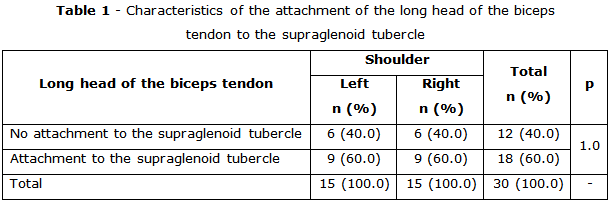
As shown in table 1, the long head of the biceps tendon attached to the supraglenoid tubercle in 18/30 shoulders (60%), whereas 12/30 shoulders (40%) showed no attachment to the supraglenoid tubercle. The distribution was similar between the right and left shoulders, with no statistically significant difference between sides (p > 0.05).
Table 2 shows that the attachment location of the long head of the biceps tendon (LHB), when mapped to the glenoid labrum, was unevenly distributed across the clock-face positions. The most common location was the 11 o’clock position, observed in 17/30 shoulders (56.7%). Less frequent locations included the 10–12 o’clock zone and the 11–12 o’clock zone, each accounting for 20.0%, whereas the 12–2 o’clock zone was recorded in only 1 shoulder (3.3%). The distribution of LHB attachment locations was relatively similar between the right and left shoulders, with no statistically significant side-to-side difference (p = 1.0).
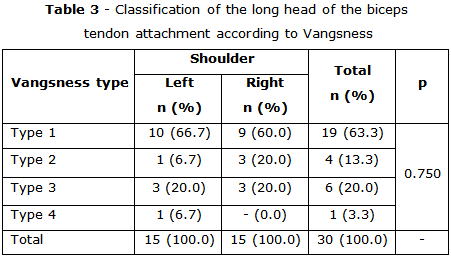
Table 3 shows that, according to the Vangsness C.T. classification, the LHB attachment was observed in all four types. Type I was the most common, occurring in 19/30 shoulders (63.3%), followed by Type III (20.0%) and Type II (13.3%), whereas Type IV was the least common (3.3%). The distribution of Vangsness types was comparable between the left and right shoulders, with no statistically significant difference (p = 0.750).
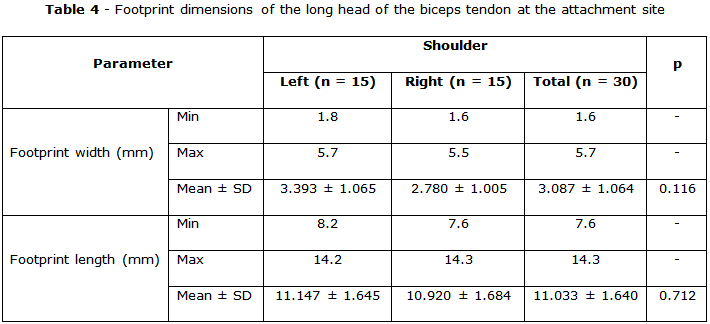
Results regarding the footprint dimensions of the long head of the biceps tendon (LHB) at the attachment site (table 4) showed that the footprint width ranged from 1.6 to 5.7 mm, with an overall mean of 3.087 ± 1.064 mm. The mean width on the left side was higher than that on the right (3.393 ± 1.065 mm vs. 2.780 ± 1.005 mm), but the difference was not statistically significant (p = 0.116).
For footprint length, values ranged from 7.6 to 14.3 mm, with an overall mean of 11.033 ± 1.640 mm. No statistically significant difference in footprint length was observed between the left and right shoulders (11.147 ± 1.645 mm vs. 10.920 ± 1.684 mm; p = 0.712).
DISCUSSION
Attachment of the long head of the biceps tendon to the supraglenoid tubercle
Results in table 1 showed that the long head of the biceps tendon attached to the supraglenoid tubercle in 60% of shoulders and did not attach in 40%, with no difference between the right and left sides (p = 1.0). This finding is consistent with recent reviews suggesting that the origin of the long head of the biceps represents an anatomical transition zone between the supraglenoid tubercle and the superior glenoid labrum, in which the relative contribution of each component may vary substantially among individuals.(1,6,11)
Compared with current findings, the classic study by Vangsness CT et al.(10) reported that the tendon component may originate from the superior labrum and/or insert onto the supraglenoid tubercle with variable proportions across specimens, highlighting the common variability of the biceps attachment region. More recent studies have also indicated that variations in the tendon’s attachment to the labrum may accompany morphological variations of the labrum, which may partly explain differences in the reported prevalence of tubercle attachment across populations and studies.(8) Clinically, differences in the attachment pattern of the long head of the biceps may influence the pathomechanisms of superior labral injury, particularly superior labrum from anterior to posterior tear (SLAP) lesions, because the biceps anchor forms part of a load-bearing complex and may be affected by traumatic or repetitive overload mechanisms.(12,13)
LHB attachment location mapped to the labrum
The LHB attachment location on the glenoid labrum was not evenly distributed; the most common position was at the 11 o’clock region (56.7%), and the observed range extended from 10 o’clock to 2 o’clock (table 2). This distribution is consistent with findings from recent reviews and consensus statements indicating that the biceps attachment is predominantly concentrated in the superior labrum and may extend anteriorly or posteriorly depending on anatomical variation of the attachment region.(1,6)
With respect to anatomical landmarks, many clinical imaging references still consider the superior labrum around the 11–1 o’clock region as the typical area related to the LHB and superior labral pathology.(14) Therefore, the high frequency observed at 11 o’clock and the presence of attachments spanning 10–2 o’clock in the present study may reflect inter-individual differences in the size and configuration of the LHB footprint, whereby the attachment may be confined to a single clock-face zone or extend across multiple adjacent zones. This concept has also been emphasized in anatomical and pathoanatomical studies of the biceps anchor, in which variability of the attachment region is regarded as a key factor in imaging interpretation and arthroscopic assessment.(1,6) From a practical standpoint, an accurate understanding of the distribution of LHB attachment locations can help guide the evaluation and management of superior labral lesions. Recent updates to the classification of superior labral injuries have highlighted that typical SLAP lesions involve the 11–1 o’clock region and may extend to adjacent portions of the labrum; thus, identifying the predominant attachment region around 11 o’clock in the studied population may assist arthroscopists in defining the inspection field and avoiding under-recognition of lesions in the superior–posterior and superior transition zones.(14,15)
Classification of the attachment pattern of the long head of the biceps tendon
Results in table 3 showed that, according to the Vangsness classification, Type I was predominant (63.3%), followed by Type III (20.0%) and Type II (13.3%), whereas Type IV was uncommon (3.3%); the distribution of types did not differ significantly between the right and left shoulders (p = 0.750). This pattern is consistent with recent reviews suggesting that the biceps anchor demonstrates substantial variability, yet the overall tendency is for attachment patterns to be biased toward the posterosuperior aspect of the labrum rather than being exclusively biased toward the anterior aspect.(1)
Compared with classic studies, Vangsness CT et al.(10) reported proportions of Type I 22%, Type II 33%, Type III 37%, and Type IV 8%. Similarly, Tuoheti Y et al.(16) using a comparable categorization (entirely posterior/posterior predominant/balanced/entirely anterior), found that posterior-biased attachments accounted for the majority, with proportions of 27.7%–55.4%–16.8%–0%, respectively. Thus, current findings are similar in that Type IV was rare; however, a notable difference is the higher proportion of Type I and the lower proportion of Type II compared with Vangsness CT et al.(10) and Tuoheti Y et al.(16) These discrepancies may be related to population characteristics (age, sex, source of specimens) and differences in gross assessment methods when distinguishing the relative contributions of tendon fibers on the anterior versus posterior aspects. Clinically, the predominance of Type I in the present study suggests that, in the studied population, the posterior component of the superior labrum may play a prominent role at the biceps anchor. This may be relevant when interpreting superior labral lesions and planning arthroscopic evaluation, as recent reviews have emphasized the anatomical diversity of the tendon–labrum complex and the risk of underestimating lesion extent if a single standard attachment pattern is assumed.(1) In addition, because the labrum increases glenoid depth and contributes to shoulder stability, differences in the tendon attachment pattern to the labrum may alter load distribution on the superior labrum during repetitive overload activities.(17)
Footprint dimensions of the long head of the biceps tendon at the attachment site
In the present study, the footprint width of the LHB ranged from 1.6 to 5.7 mm, with an overall mean of 3.087 ± 1.064 mm; the footprint length ranged from 7.6 to 14.3 mm, with an overall mean of 11.033 ± 1.640 mm. No statistically significant side-to-side differences were observed for either width (p = 0.116) or length (p = 0.712). Denard PJ. et al.(18) in a series of 21 shoulders, reported footprint width ranging from 4.5 mm to 12 mm, with a mean of 6.6 ± 1.6 mm. In a study by Mehl J et al.(19) the LHB origin footprint width was reported to be approximately 5–6 mm. The differences across studies regarding LHB footprint dimensions may be attributable to variation in cadaver characteristics (age, sex), preservation methods, and inter-center differences in specimen handling, which can influence measurement outcomes. Taken together, available evidence suggests that footprint dimensions show inter-individual variability but appear relatively consistent between sides, consistent with the anatomical concept that the LHB origin represents a continuous structure between the supraglenoid tubercle and the superior glenoid labrum, with the attachment often biased toward the posterosuperior labrum.(10,20)
Recent reviews on labral anatomy and function emphasize that the glenoid labrum increases glenoid depth (concavity) and contributes compressive stability to the humeral head, thereby enhancing shoulder joint stability.(17) Accordingly, the size and morphology of the LHB footprint at the superior labrum may influence load distribution across the labrum, particularly under repetitive overload or traumatic mechanisms leading to superior labral injury.(21) In this context, current finding of an average footprint length of approximately 11 mm and an average width of approximately 3 mm, along with the observed range of variation, provides useful reference data for imaging interpretation and for arthroscopic assessment of the LHB origin, rather than assuming a single standard attachment size applicable to all individuals.(15,21) From a practical standpoint, contemporary studies of superior labral lesions emphasize heterogeneity of pathology around the biceps anchor and differences in injury mechanisms.(15,21) therefore, identifying footprint dimensions and their variability may assist arthroscopists in assessing lesion extent, particularly in cases of superior labral injury involving the LHB attachment region. Footprint size is also relevant when selecting the size and position of suture anchors used in surgical procedures. However, it should be noted that the load tolerance of the tendon may not depend solely on its footprint size.(15,21)
Although the sample size was considered acceptable for an anatomical investigation, a limitation of this study is the relatively modest number of specimens, which may not fully capture the spectrum of anatomical variation in the population. In addition, the study was conducted at a single center and was based on cadaveric dissection; therefore, generalizability to other populations and direct correlations with clinical manifestations remain limited. Further studies with larger samples and multicenter designs, as well as integration of clinical and imaging data, are warranted to clarify the clinical implications of these findings.
This study demonstrated marked variability in the location, attachment pattern, and footprint dimensions of the long head of the biceps tendon at the superior labrum and supraglenoid tubercle, with Vangsness Type I predominating. These findings provide anatomical reference data that may support imaging interpretation, shoulder arthroscopy, and a better understanding of the mechanisms underlying superior labral pathology. The study’s observations may have practical implications for diagnosis and for planning interventions for conditions involving the biceps tendon and the glenoid labrum.
BIBLIOGRAPHIC REFERENCES
1. Diplock B, Hing W, Marks D. The long head of biceps at the shoulder: a scoping review [Internet]. BMC musculoskeletal disorders. 2023; 24(1):232. DOI: 10.1186/s12891-023-06346-5
2. Sethi P, Fares MY, Murthi A, Tokish JM, Abboud JA. The long head of the biceps tendon: a valuable tool in shoulder surgery [Internet]. Journal of Shoulder and Elbow Surgery. 2023; 32(9):1801-11. DOI: 10.1016/j.jse.2023.04.009
3. Rauck RC, Jahandar A, Kontaxis A, Dines DM, Warren RF, Taylor SA, et al. The role of the long head of the biceps tendon in posterior shoulder stabilization during forward flexion [Internet]. Journal of Shoulder and Elbow Surgery. 2022; 31(6):1254-60. DOI: 10.1016/j.jse.2021.12.026
4. Neculau DC, Avram GM, Kwapisz A, Scarlat MM, Obada B, Popescu I-A. Long head of the biceps tendon versatility in reconstructive shoulder surgery: a narrative review of arthroscopic techniques and their biomechanical principles with video presentation [Internet]. International Orthopaedics. 2024; 48(5):1249-56. DOI: 10.1007/s00264-024-06126-3
5. Khalil MH, Gad AM. Long head of biceps as an anterior dynamic sling for recurrent anterior shoulder dislocation [Internet]. Journal of Orthopaedic Surgery and Research. 2025; 20(1):385. DOI: 10.1186/s13018-025-05769-1
6. Eichinger JK, Li X, Cohen SB, Baker III CL, Kelly JD, Dines JS, et al. American Shoulder and Elbow Surgeons SLAP/Biceps Anchor Study Group evidence review: pathoanatomy and diagnosis in clinically significant labral injuries [Internet]. Journal of Shoulder and Elbow Surgery. 2023; 32(5):e179-e190. DOI: 10.1016/j.jse.2022.12.015
7. Yu J, Yin Y, Chen W, Mi J. Long head of the biceps tendon plays a role in stress absorption and humeral head restriction during the late cocking and deceleration phases of overhead throwing: a finite element study [Internet]. Journal of Shoulder and Elbow Surgery. 2025; 34(3):699-709. DOI: 10.1016/j.jse.2024.07.002
8. Lu Y, Li Y, Zhang H, Li X, Li F, Jiang C. The correlation between variation of labral attachment and lesions of the Long head of the biceps tendon in patients with rotator cuff tears [Internet]. Orthopaedic surgery. 2023; 15(8):1967-74. DOI: 10.1111/os.13534
9. Tank PW. Grant's dissector. Philadelphia: Lippincott Williams & Wilkins; 2012.
10. Vangsness CT, Jorgenson SS, Watson T, Johnson DL. The origin of the long head of the biceps from the scapula and glenoid labrum. An anatomical study of 100 shoulders [Internet]. The Journal of Bone & Joint Surgery British Volume. 1994; 76(6):951-4. DOI: 10.1302/0301-620X.76B6.7983126
11. Verma NN, Hoenecke H, MacDonald P, Dornan GJ, Berreta RS, Scanaliato JP, et al. Principles of the superior labrum and biceps complex: an expert consensus from the NEER Circle [Internet]. Journal of Shoulder and Elbow Surgery. 2025; 34(6):1543-57. DOI: 10.1016/j.jse.2024.09.040
12. Varacallo MA, Tapscott DC, Mair SD. Superior labrum anterior posterior lesions. Treasure Island (FL): StatPearls Publishing; 2023. [access: 10/01/2026]. Available from: https://www.ncbi.nlm.nih.gov/books/NBK538284
13. Brockmeyer M, Lorbach O. SLAP (Superior Labrum Anterior and Posterior) Lesion. Cham: Springer; 2025. [access: 10/01/2026]. Available from: https://link.springer.com/rwe/10.1007/978-3-030-65430-6_94-1
14. Oklaz EB, Ahmadov A, Aral F, Erdem MC, Ayas IH, Kanatli U. Inferior labrum tears can accompany SLAP lesions and inferior labrum repair with SLAP lesion treatment results in satisfactory clinical outcomes at a minimum 2-year follow-up [Internet]. Archives of orthopaedic and trauma surgery. 2025; 145(1):328. DOI: 10.1007/s00402-025-05940-7
15. Hurley ET, Taylor DC, Twomey-Kozak J, Lorentz SG, Crook BS, Hinton ZW, et al. A mechanistic classification for superior labral injuries guides operative management [Internet]. Arthroscopy: The Journal of Arthroscopic & Related Surgery. 2025; 41(10):4367-78. DOI: 10.1016/j.arthro.2025.03.059
16. Tuoheti Y, Itoi E, Minagawa H, Yamamoto N, Saito H, Seki N, et al. Attachment types of the long head of the biceps tendon to the glenoid labrum and their relationships with the glenohumeral ligaments [Internet]. Arthroscopy: The Journal of Arthroscopic & Related Surgery. 2005; 21(10):1242-9. DOI: 10.1016/j.arthro.2005.07.006
17. Almajed YA, Hall AC, Gillingwater TH, Alashkham A. Anatomical, functional and biomechanical review of the glenoid labrum [Internet]. Journal of anatomy. 2022; 240(4):761-71. DOI: 10.1111/joa.13582
18. Denard PJ, Dai X, Hanypsiak BT, Burkhart SS. Anatomy of the biceps tendon: implications for restoring physiological length-tension relation during biceps tenodesis with interference screw fixation [Internet]. Arthroscopy: The Journal of Arthroscopic & Related Surgery. 2012; 28(10):1352-8. DOI: 10.1016/j.arthro.2012.04.143
19. Mehl J. Proximal Biceps Long Head: Anatomy, Biomechanics, Pathology [Internet]. Operative Techniques in Sports Medicine. 2018; 26(2):76-81. DOI: 10.1053/j.otsm.2018.02.002
20. Tiwana MS, Sinkler MA, Bordoni B. Anatomy, shoulder and upper limb, triceps muscle. Treasure Island (FL): StatPearls Publishing; 2023. [access: 10/01/2026]. Available from: https://www.ncbi.nlm.nih.gov/books/NBK536996/
21. Mercouris P, Mercouris M. Superior labrum anterior to posterior lesions: Part 1–Imaging and anatomy with arthroscopic classification [Internet]. SA Journal of Radiology. 2023; 27(1):2706. DOI: 10.4102/sajr.v27i1.2706
Conflict of interest
The author(s) declared no potential conflicts of interest with respect to the research, authorship, and/or publication of this article.
Authorship contribution
Conceptualization: Nguyen Van Phung, Nguyen Thanh Van, Nguyen Ha Ngoc.
Data curation: Nguyen Van Phung, Nguyen Ha Ngoc, Nguyen Thanh Van.
Formal analysis: Nguyen Van Phung, Nguyen Ha Ngoc.
Research: Nguyen Van Phung, Nguyen Ha Ngoc.
Methodology: Nguyen Van Phung, Nguyen Thanh Van, Bui Dang Minh Tri.
Project administration: Nguyen Van Phung, Nguyen Thanh Van.
Supervision: Nguyen Thanh Van. Nguyen Ha Ngoc, Bui Dang Minh Tri.
Validation: Nguyen Van Phung, Nguyen Thanh Van.
Drafting - Revision and editing: Nguyen Van Phung, Nguyen Thanh Van, Bui Dang Minh Tri.
Data Availability
This research data is confidential according to the applicable confidentiality agreements and regulations and, therefore, cannot be publicly displayed or shared. Access to these data requires proper authorization. For any questions or further information, please contact Nguyen Thanh Van at drthanhvan@gmail.com.